

For business owners
Your team does the same thing by hand every week. We take it off them, with the tools you already pay for.
See how it works

Most companies already own the automation they think they need to buy. Copilot too. It sits in their Microsoft tenant, licensed and unused. We turn it on.
Based in Paphos, Cyprus. Working remotely across Europe and the UK.
We believe a person's working hours are the most expensive thing a business buys and the easiest thing it wastes. The waste is rarely dramatic. It is the form retyped, the file matched by hand, the reminder written every Friday, the phone number typed into a third system. Each takes a minute. Each happens a thousand times a year. Office Lab exists to find those minutes and give them back, so that people spend their day on work that needs a person.
Your team does the same thing by hand every week. We take it off them, with the tools you already pay for.
See how it worksA senior Microsoft 365 and Power Platform builder, remote, in your time zone, from the analysis to the handover. For IT firms that need Microsoft capacity: capacity under your name, your client stays yours.
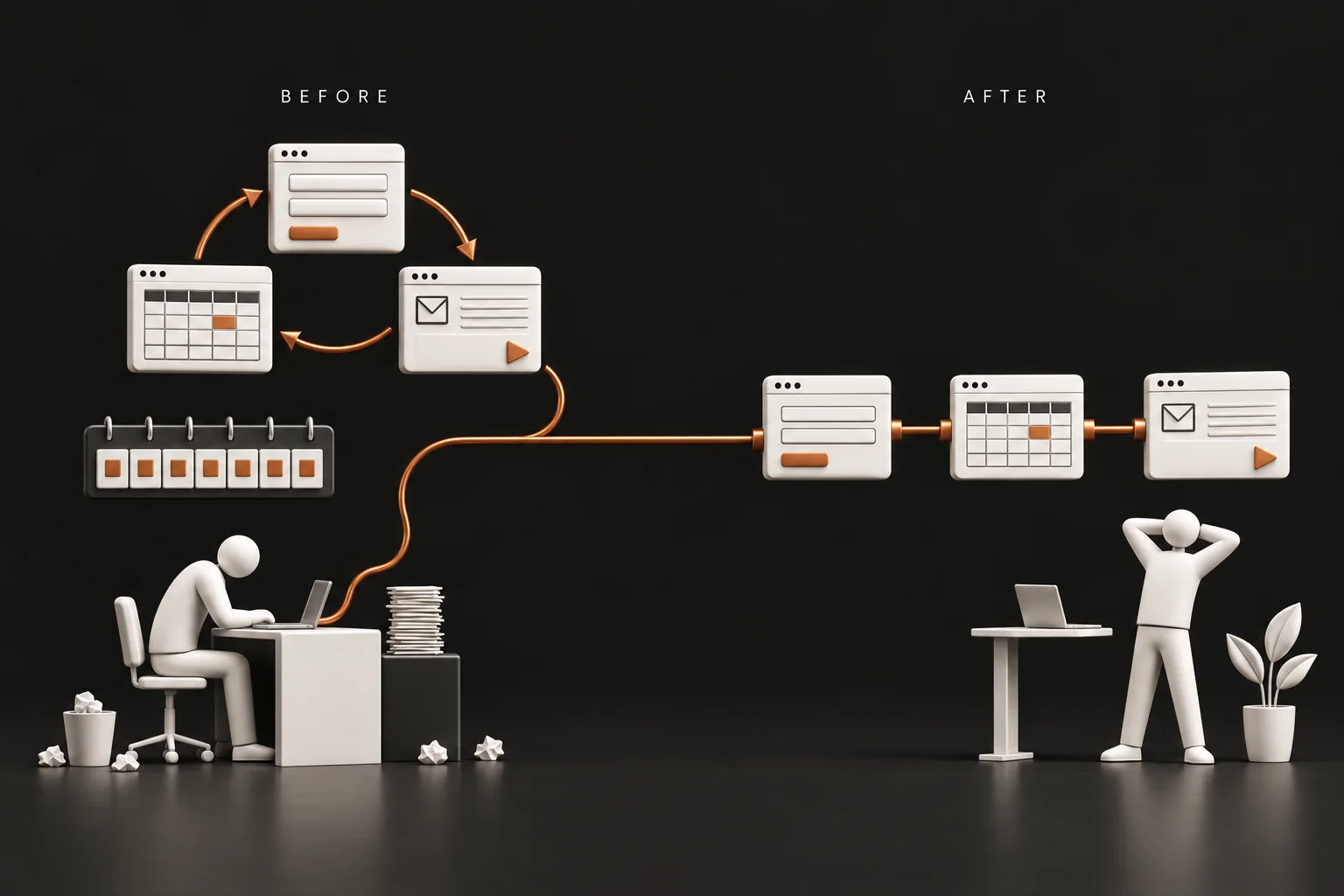
See the profileEvery company has its knots. A form that gets typed into one system and then again into another. An Excel sheet only one person understands. A client folder that was copied into a subfolder by accident, and now exists twice everywhere. We find those knots and untangle them with process optimisation, Microsoft 365, Power Platform and automation. The same work, in one straight line.
We sit next to the person who does the job, on an ordinary Tuesday, and watch where the minutes go. Most waste is invisible to the people inside it. From one chair over it is hard to miss.
We build the smallest thing that could remove the repeat, usually within a couple of days, and put it in front of the people who will use it. Half of what we learn comes from watching them try to break it.
The version that survived goes live in your own Microsoft 365, on your accounts, with the rules your business actually runs on. Nothing sends, pays or deletes without a person pressing the button.
Your team is shown how it works until they stop asking. The documentation stays with you. So does the admin account. If you never need to call us again, that was the plan. Most people call about the next one.
Guests fill in the same card by hand at the desk, someone types it into the booking system later, and check-out is a second queue with the taxi waiting.
Hours travel from a dashboard to WhatsApp to a spreadsheet to payroll to the invoice, and every keyboard on the way can get it wrong.
The first days of the month go on comparing the time system with the contract, then on chasing whatever came back unpaid.
Thirty minutes, by video or phone, with one of our team. Bring the job that annoys you most. If there is nothing to gain, we say so in the first ten minutes.
Book a callTwo minutes of typing. Tell us what keeps repeating and we tell you what we see. That costs you nothing, and it is usually enough to know whether we should talk.